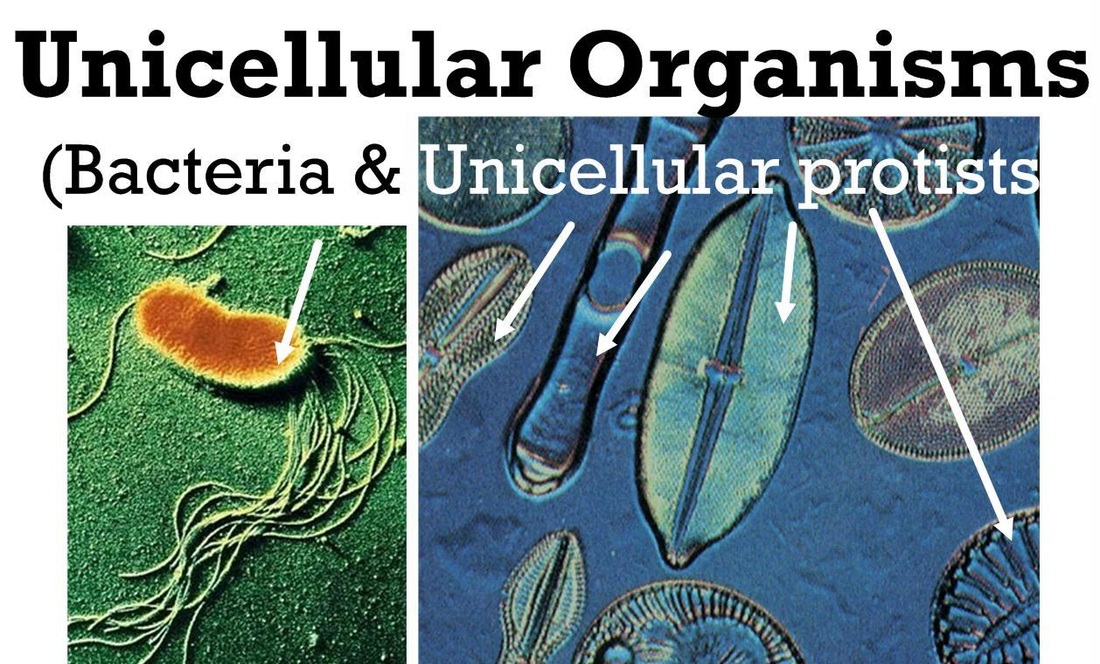
Here is a microscopic view of pond water.
This is similar to what Anton van Leeuwenhoek saw when he examined pond water under a microscope. What type of unicellular organisms can you see here?
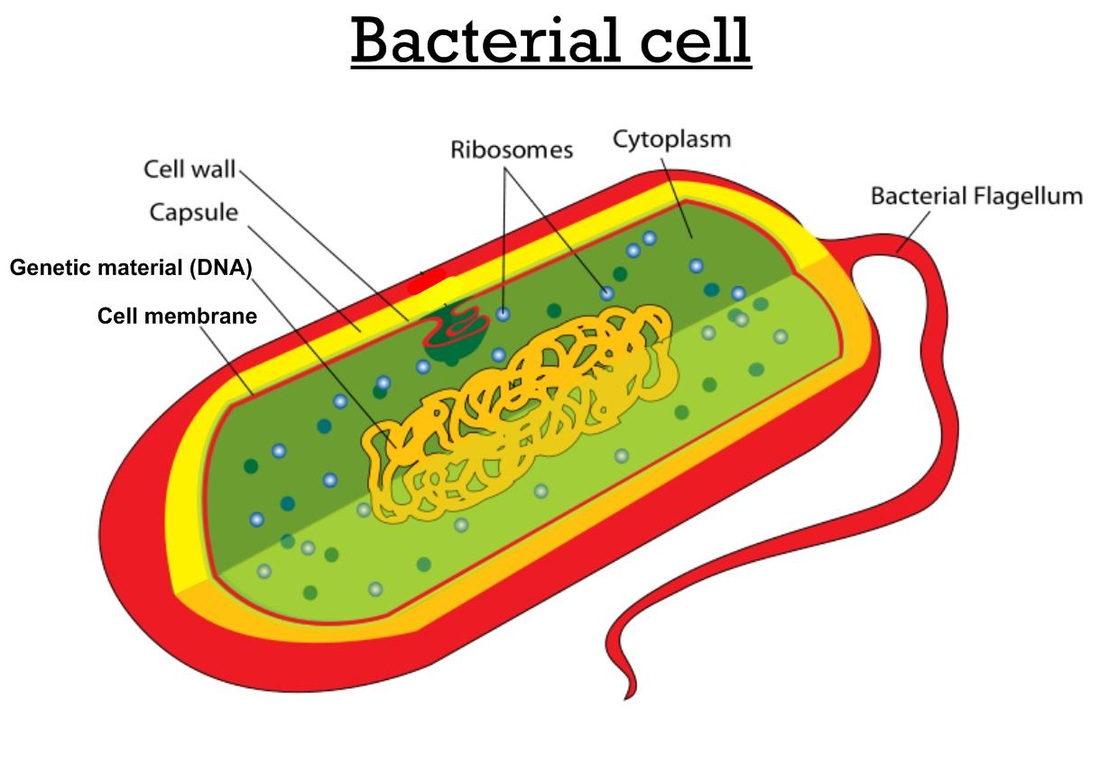
Parts of a Bacterial Cell
Below is a diagram that shows the different parts of a bacterial cell. How is this similar to our (animal) cells? How is this similar to plant cells?
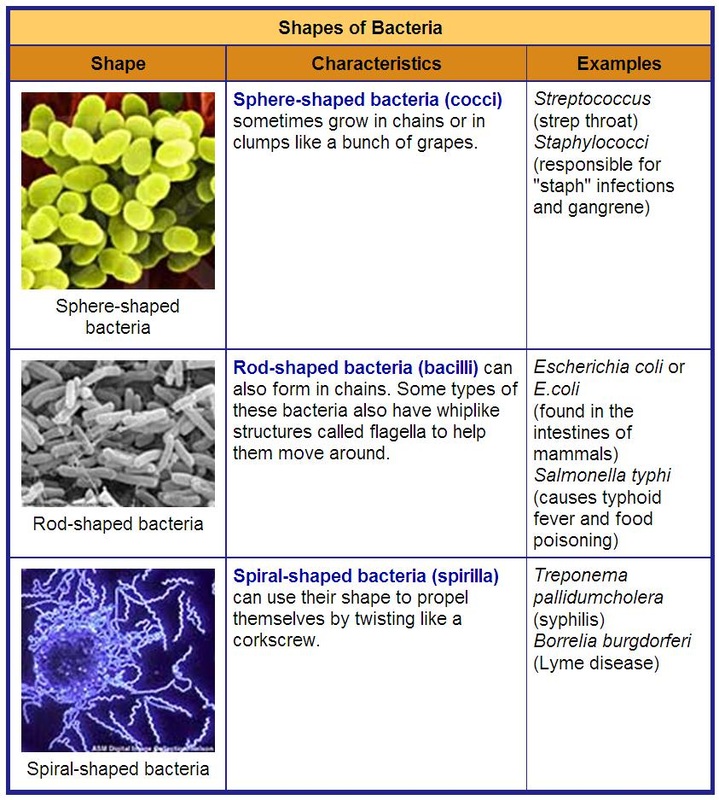
Find out more about bacteria...
Click this link!
The two ways bacteria can reproduce:
The first way they can reproduce is through binary fission.
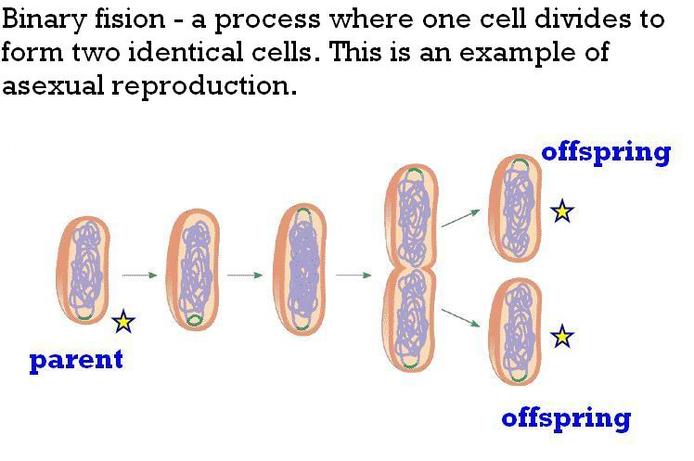
Binary fission and asexual reproduction
Binary fission is an example of asexual reproduction, which is a type of reproduction in which there is only one parent, and the offspring are exactly the same as the parent. The offspring have the exact same genetic information (DNA) as the parent.
Here is a cartoon showing binary fission:
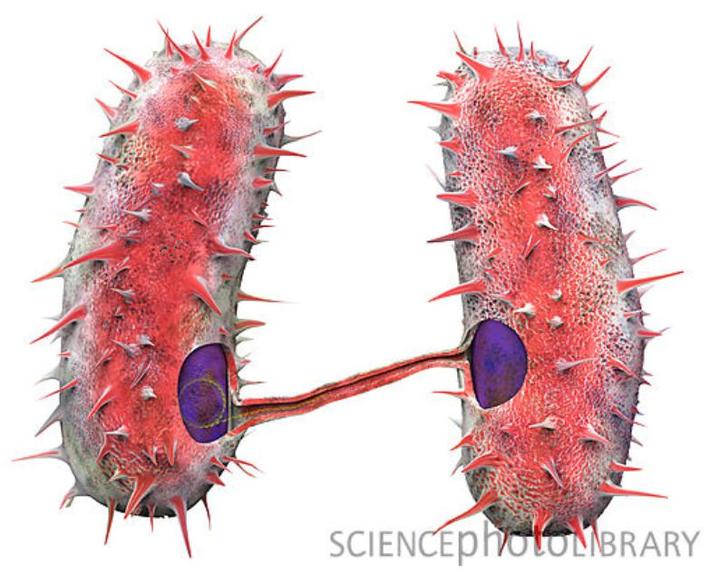
The second way bacteria can reproduce is through conjugation. This is a method of reproduction in which one bacterium transfers some of its genetic material into another bacterial cell.
This is an example of sexual reproduction, where there are two parents and the offspring has a new combination of genetic material (DNA) that are genetically different from their parents.
This is an example of sexual reproduction, where there are two parents and the offspring has a new combination of genetic material (DNA) that are genetically different from their parents.
Bacteria can be really helpful in our world!
Here is a video showing how bacteria help to decompose these fruits and vegetables. Although you cannot see them, the bacteria are there breaking down the nutrients in those plants and returning them to the soil, for other organisms to use when they grow in the soil.
Quiz yourself on some facts about bacteria!
click on this link to try it out
Protists
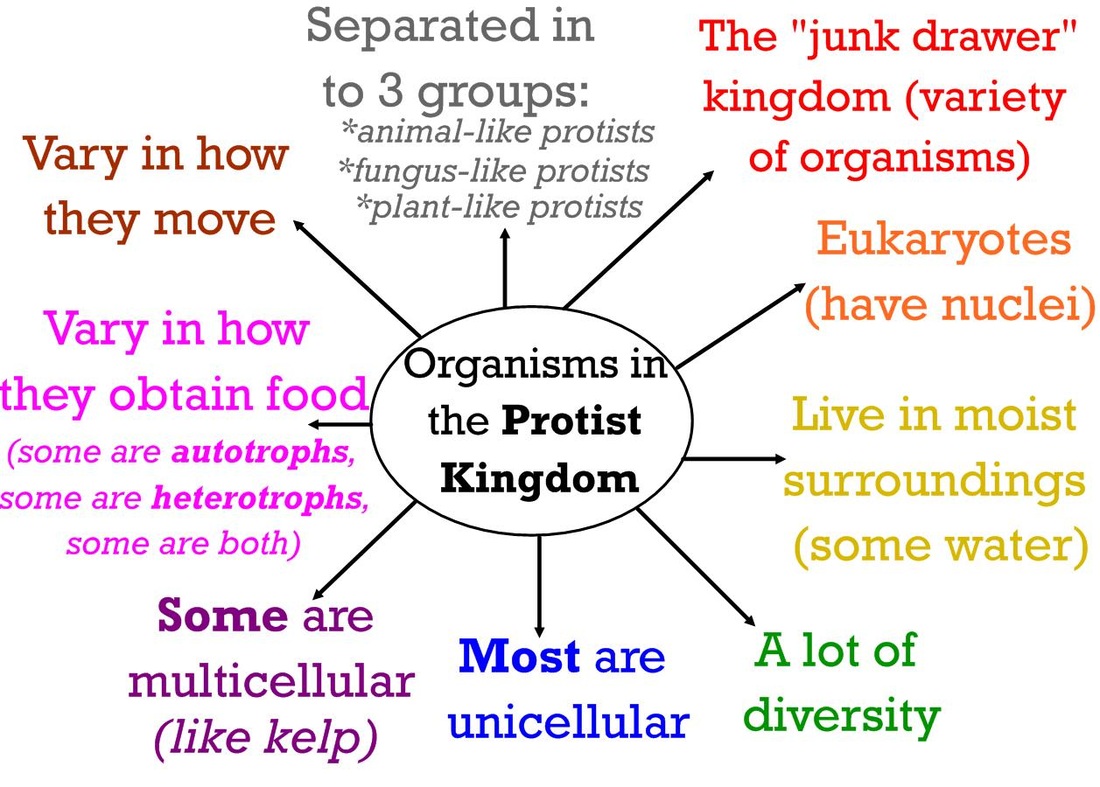
Unicellular organisms
in the Protist Kingdom
Here's a short video explaining how diverse the organisms in the protist kingdom are:
Amoebas, Paramecia and Euglenas:
Other interesting unicellular organisms
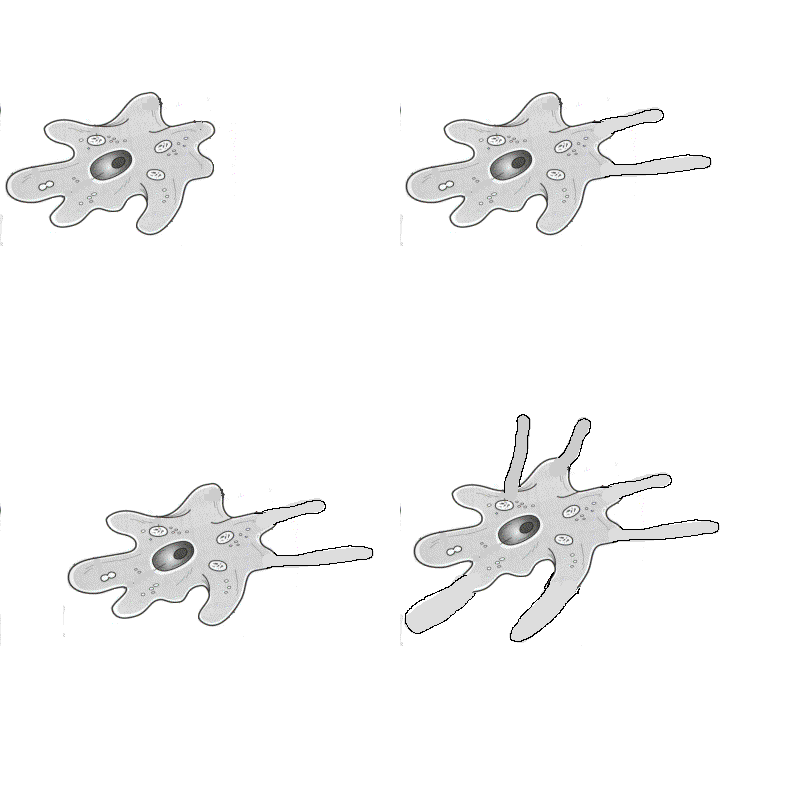
Amoebas (amebas)How do they move?Amoebas move by using a pseudopod (sue doh pod). A pseudopod means "false foot" and works like this: the cell membrane pushes outward towards one direction, and the cytoplasm flows in to that space. After this, the rest of the cell follows in to the new direction.
|
|
Here are the parts of an Amoeba:
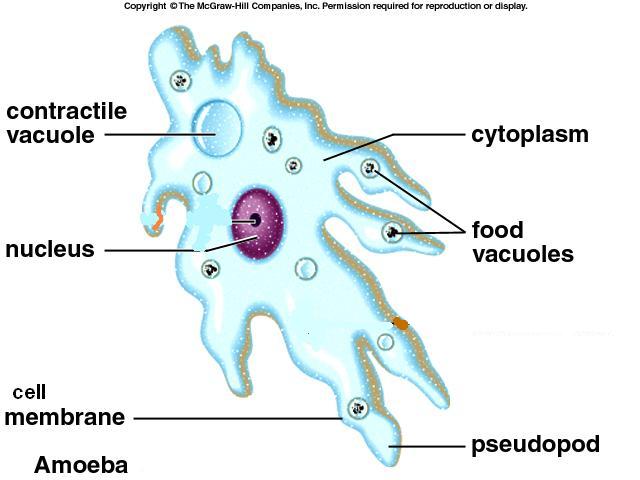
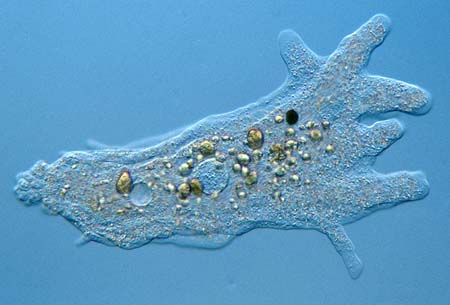
Can you find all of those parts on the actual picture of an amoeba below?
|
|
Compare and contrast: Amoeba vs. Paramecium
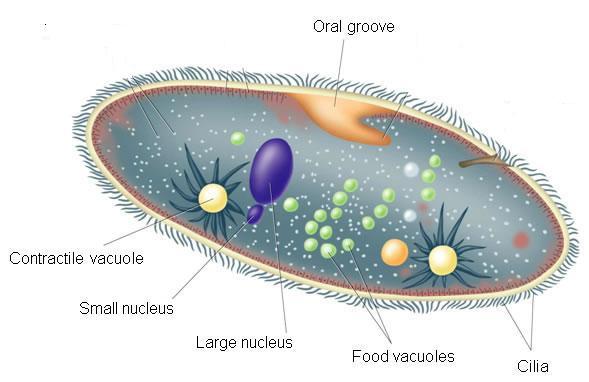
Look at the paramecium below. This is another example of a unicellular organism, however this one is different from the amoeba pictured above. Can you see the hairlike strands on the outside of the paramecium? These move in a wavelike motion to help it move!
Parts of a paramecium
What similarities do you see to the Amoeba cell? What similarities do you see to our cells?
Plant-like protists
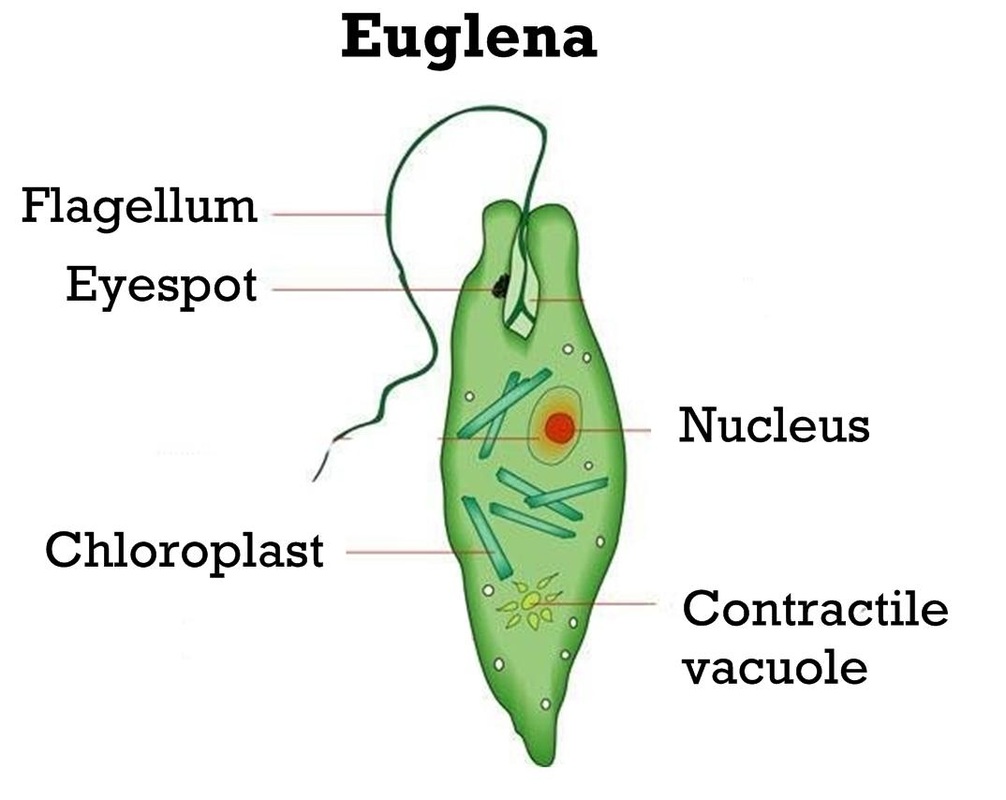
Another type of protist are ones that are plant-like, meaning they can make their own food. One example of that is algae. An example of a unicellular algea is called the euglena.
The euglena can produce its own food like a plant with the help of the eyespot, which can direct it to a light source. But what's interesting is that the euglena can also search for food if light is not available. The euglena can be both and autotroph AND a heterotroph!
The euglena can produce its own food like a plant with the help of the eyespot, which can direct it to a light source. But what's interesting is that the euglena can also search for food if light is not available. The euglena can be both and autotroph AND a heterotroph!